
Creating a Shared Vision
Because direction only works when people genuinely see themselves in it.
Most organisations have a vision statement.
Fewer have a vision that people actually relate to.
When direction feels abstract or imposed, teams comply without commitment.
When vision feels shared, it becomes a source of energy, alignment, and choice.
Creating a Shared Vision is designed to help groups and organisations pause, reflect, and co-create a sense of direction that people can genuinely connect to and act on.


When Organisations Call Us
Organisations typically explore Shared Vision work when:
- Strategy exists, but alignment feels uneven
- Teams are busy, but direction feels unclear
- Different leaders interpret priorities differently
- Growth or change has created confusion about what matters most
- People ask for clarity, but not more slides
Often, the challenge is not a lack of ambition.
It is a lack of shared meaning.
Why Creating a Shared Vision Is Different
Shared vision is not about crafting the perfect statement.
It is about building collective understanding around:
- What future the organisation is working toward
- Why that future matters
- What choices and trade-offs it requires
Because people commit to direction when they help shape it.
Not when it is communicated to them.
A Shared Vision journey creates space for dialogue, divergence, and alignment so direction becomes lived, not declared.
Our Lens on Shared Vision
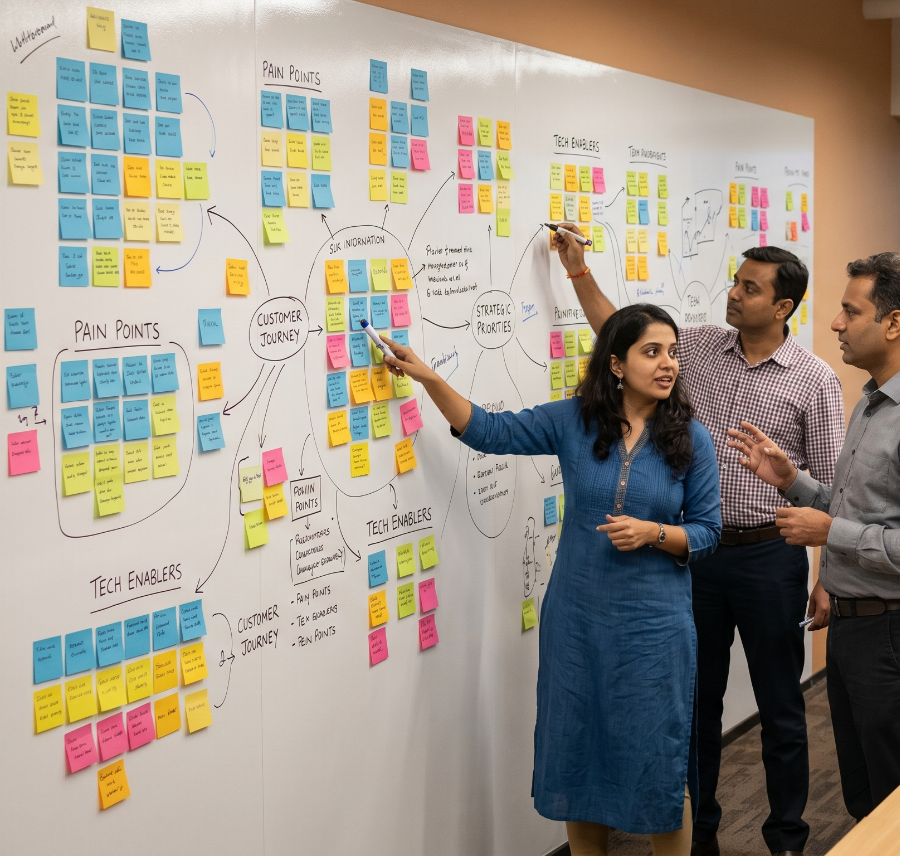
Our approach to creating shared vision is grounded in a few core beliefs:
Vision without ownership remains aspirational
Alignment emerges through conversation, not cascade
Differences in perspective are a resource, not a problem
Clarity grows when assumptions are surfaced and tested
Commitment follows meaning, not instruction
We do not write vision statements for organisations.
We help people make sense of where they are heading and why it matters.
How a Shared Vision Journey Typically Unfolds
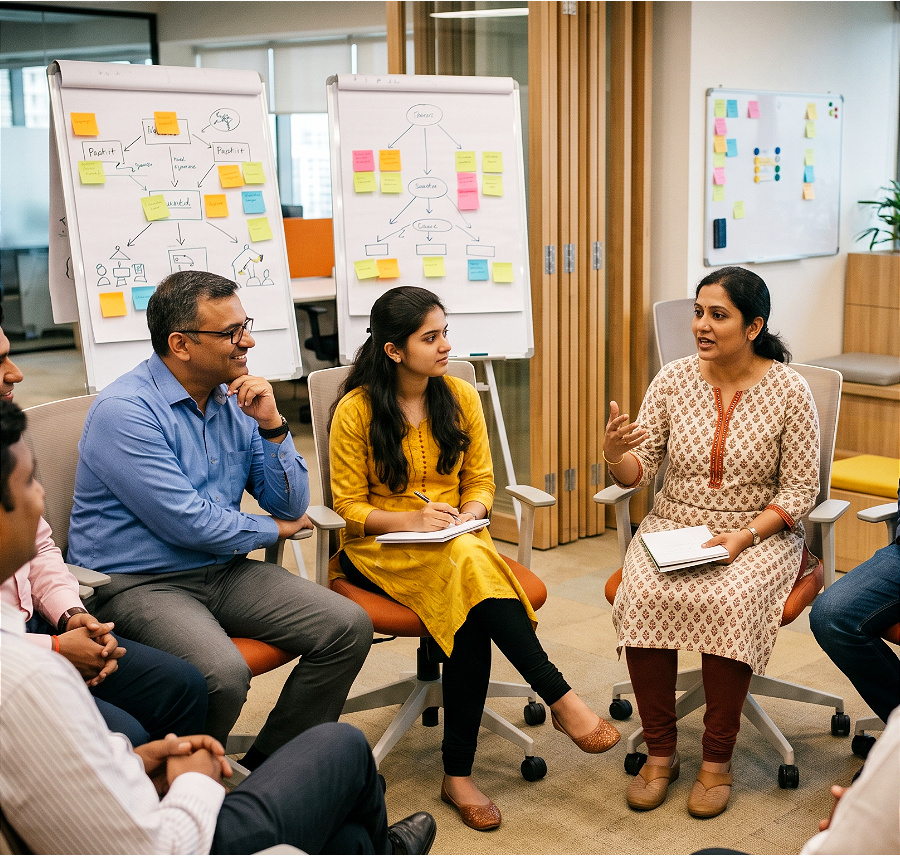
Every Shared Vision journey is tailored, but most follow a deliberate arc:
Understanding current realities, aspirations, and tensions across the system.
Creating space for diverse viewpoints, hopes, and concerns to be voiced openly.
Facilitated dialogue to explore patterns, priorities, and shared themes.
Groups articulate what future they want to move toward and what it asks of them.
Connecting shared direction to everyday decisions, priorities, and ways of working.
A shared vision is not an endpoint.
It becomes a reference point for action.
What This Enables Over Time
When shared vision work is done well, organisations begin to see:
- Stronger alignment across teams and levels
- Greater clarity in decision-making and prioritisation
- Reduced friction caused by competing interpretations
- Higher ownership of strategy and outcomes
- Energy focused on what truly matters
Most importantly, people experience direction as something they belong to.

Where Shared Vision Work Is Most Valuable
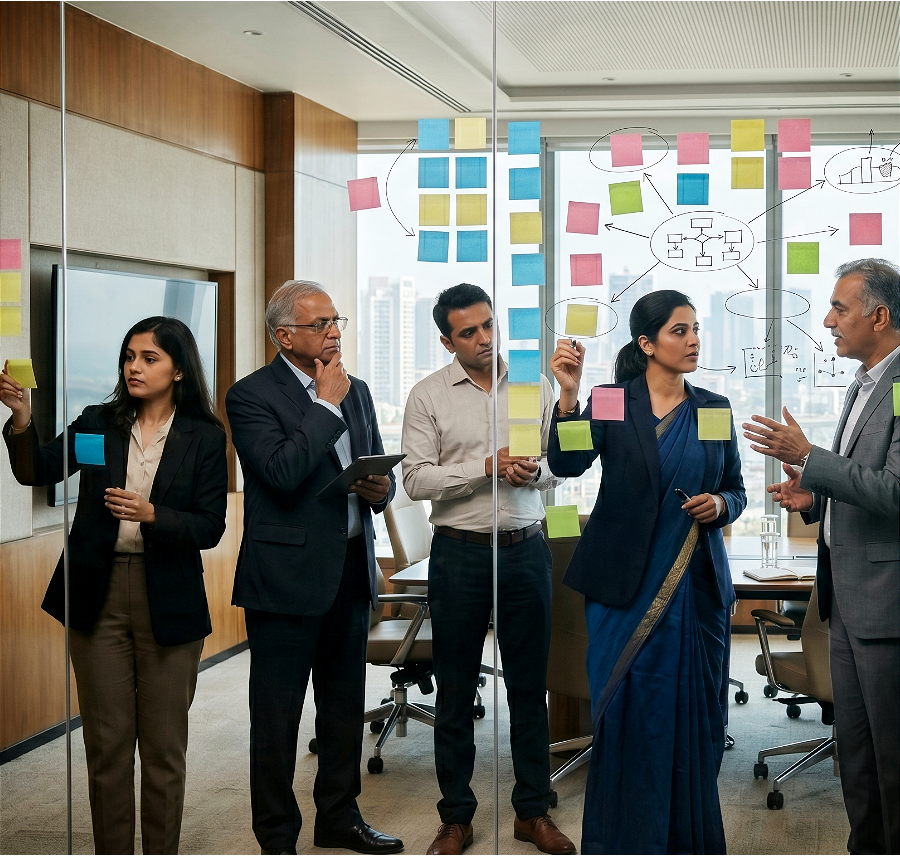
Creating a Shared Vision is especially powerful:
- During growth, transformation, or strategic shifts
- When leadership teams need alignment before cascading direction
- After mergers, restructuring, or significant change
- When strategy feels sound, but traction is missing
- When clarity matters more than speed
How We Hold The Work
Our Culture & OD engagements are guided by a simple principle:
creating SPACE for teams to think, speak, and choose together.
-
S
Safety
Creating a safe space to speak honestly even when conversations are difficult
-
P
Presence
Staying attentive to what is happening in the room, both spoken and unspoken
-
A
Authentic Dialogue
Encouraging open conversations that surface real perspectives and tensions
-
C
Choice
Allowing direction to emerge through shared sensemaking & not prescription
-
E
Enabling Tools
Using methods & tools only when they serve the moment and the context

Stories of Direction and Alignment
Across contexts, Shared Vision journeys have helped organisations:
- Move from competing priorities to shared focus
- Replace ambiguity with collective clarity
- Align leadership teams before broader change
- Turn strategy into everyday choices
Frequently asked questions
Don’t see an answer to your question?
Drop us an email and we will get back

Strategy defines choices and priorities. Shared vision focuses on meaning and alignment. This work is not about creating a new strategy or writing a vision statement. It is about helping people make sense of direction together, understand what the organisation is moving towards, and see how they connect to it in their day-to-day work.
Not necessarily. Shared Vision work can be valuable both when a strategy exists and when direction is still evolving. The focus is on surfacing perspectives, clarifying intent, and building shared understanding, regardless of how formal the strategy process is.
The right group depends on the context. Some journeys begin with senior leadership teams. Others involve cross-functional or representative groups. The participants are co-identified based on who needs to align, influence, and carry the vision forward.
Sometimes, but that is not the primary goal. The real outcome is alignment in how people interpret direction, make decisions, and prioritise work. Any articulation that emerges is a by-product of shared understanding, not the objective itself.
You begin to see it in everyday choices. Indicators include clearer prioritisation, fewer conflicting interpretations, more aligned decision-making, and conversations that reference shared intent rather than individual agendas. Over time, direction becomes something people act from, not just talk about. A shared vision lives in conversations and choices, not just in words.
Let’s Begin with a
Conversation
If your organisation feels ambitious but misaligned, clear on goals but divided on priorities, or busy without a shared sense of direction, it may be time to co-create a vision people can truly stand behind.
Let’s explore what shared direction could look like for you.