
Aligning Different Perspectives
Because progress depends on how well differences are understood, not eliminated.
In most organisations, misalignment is not caused by lack of intent.
It is caused by differing perspectives.
Leaders and teams often see the same situation differently, shaped by role, function, experience, and pressure. When these perspectives remain unspoken or unresolved, decisions slow down, trust erodes, and collaboration suffers.
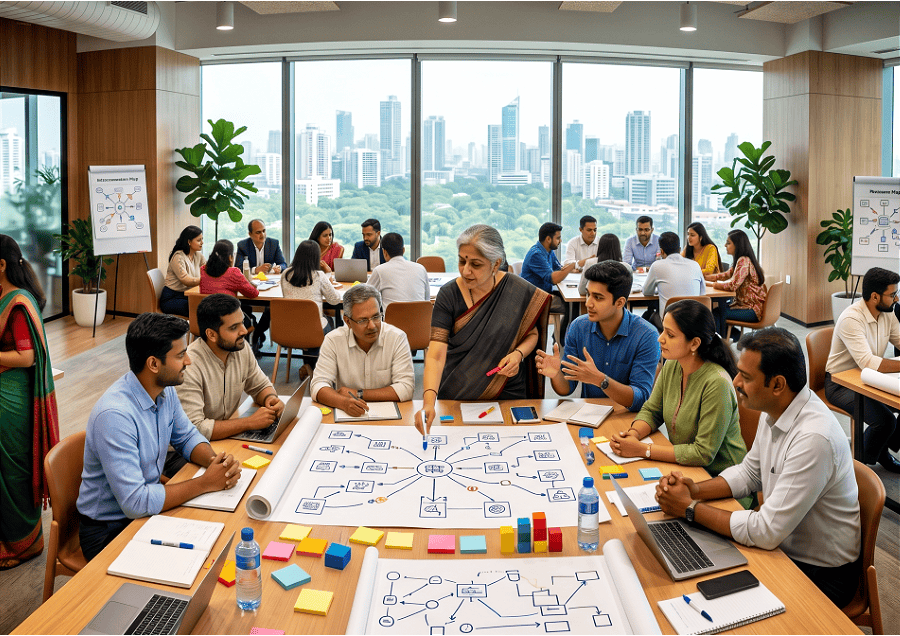
Aligning Different Perspectives is designed to help teams surface differences, make sense of them together, and move forward with shared clarity and respect.

When Organisations Call Us
Organisations typically explore this work when:
- Teams talk past each other despite good intentions
- Functional or role-based silos dominate conversations
- Decisions stall due to competing viewpoints
- Conflict feels unresolved or quietly avoided
- Alignment is assumed but not tested
Often, the challenge is not disagreement.
It is the absence of a shared process to work through it.
Why Aligning Perspectives Is Different
This work is not about forcing consensus or reducing differences.
It is about:
- Making perspectives visible without judgment
- Understanding what each view is responding to
- Distinguishing facts, assumptions, and interpretations
- Finding common ground without erasing diversity
Because alignment is not agreement.
It is shared understanding that enables coordinated action.
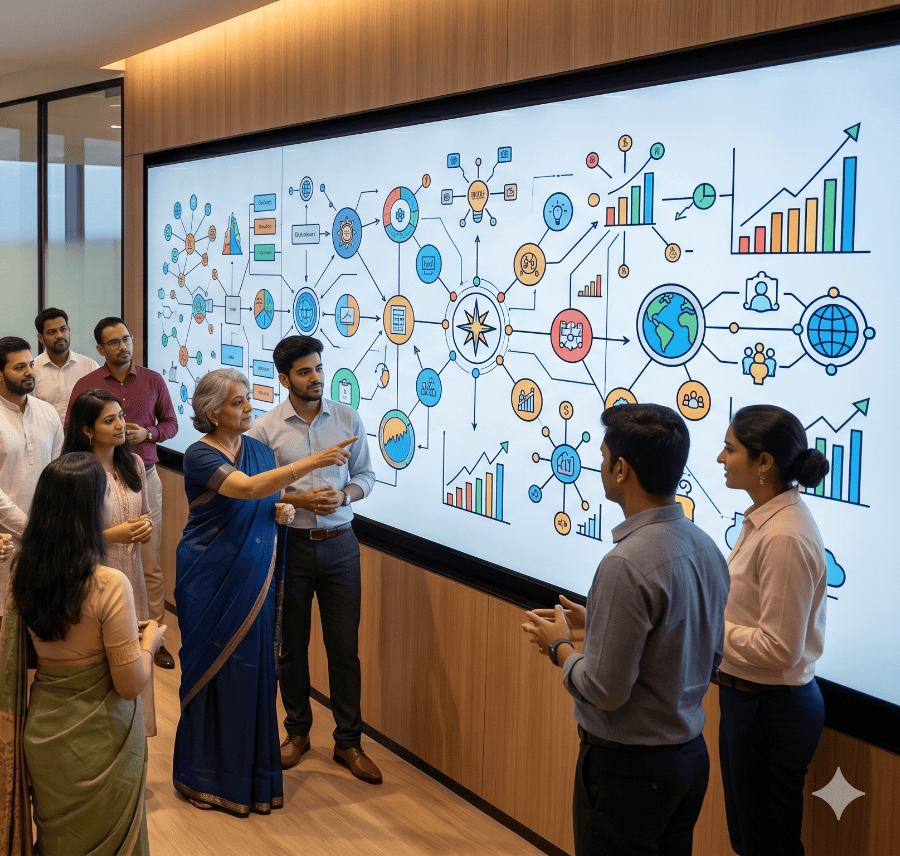
This work helps teams move from positional debate to collective sensemaking.
Our Lens on Perspective Alignment
Our approach is grounded in a few core beliefs:
Different perspectives carry valuable information
Unspoken assumptions create friction
Listening changes how people think, not just how they respond
Alignment emerges through dialogue, not persuasion
Respectful disagreement strengthens decisions
We do not try to resolve differences for teams.
We help them develop the capacity to work through differences productively.

How Perspective Alignment Typically Unfolds
Each engagement is tailored, but often follows a shared arc:
Creating space for individuals and groups to articulate how they see the situation.
Exploring what is driving each perspective, including constraints, incentives, and concerns.
Facilitated dialogue that helps the group see patterns, overlaps, and tensions.
Identifying shared priorities, decision criteria, and areas of alignment.
Agreeing on how to move forward together, even when perspectives differ.
Alignment is not about sameness.
It is about coherence.
What This Enables Over Time
When teams learn to align perspectives effectively, organisations begin to see:
- Faster and better-quality decisions
- Reduced friction across functions and roles
- Stronger trust and psychological safety
- More productive conflict
- Greater follow-through and execution
Most importantly, teams build confidence in handling complexity together.


Where This Work Is Most Valuable
Aligning Different Perspectives is especially powerful:
- For cross-functional or leadership teams
- During change, transformation, or growth
- When decisions carry significant trade-offs
- After periods of conflict or misalignment
- When collaboration is essential for performance
How We Hold The Work
Our Culture & OD engagements are guided by a simple principle:
creating SPACE for teams to think, speak, and choose together.
-
S
Safety
Creating a safe space to speak honestly even when conversations are difficult
-
P
Presence
Staying attentive to what is happening in the room, both spoken and unspoken
-
A
Authentic Dialogue
Encouraging open conversations that surface real perspectives and tensions
-
C
Choice
Allowing direction to emerge through shared sensemaking & not prescription
-
E
Enabling Tools
Using methods & tools only when they serve the moment and the context

Stories of Alignment
Across organisations, this work has helped teams:
- Move from debate to dialogue
- Replace assumption-driven conflict with understanding
- Align on direction without suppressing differences
- Strengthen collaboration across boundaries
Frequently asked questions
Don’t see an answer to your question?
Drop us an email and we will get back

No. While conflict may surface, the focus is on understanding perspectives and enabling alignment, not on managing behaviour or forcing agreement. Differences are treated as inputs, not problems to be eliminated.
That is precisely when this work is most valuable. The process helps teams slow down, listen, and examine what each perspective is responding to, creating conditions for more thoughtful decisions even when agreement is difficult.
The people whose perspectives shape decisions and outcomes. This often includes leadership teams, cross-functional groups, or stakeholders who need to work together despite differing priorities or viewpoints.
Not necessarily. The outcome is shared understanding and alignment around how to move forward, rather than a perfect or unanimous solution.
You see it in how conversations change. Indicators include clearer decision-making, reduced defensiveness, more respectful disagreement, and greater willingness to act together despite differences.
Let’s Begin with a
Conversation
If your teams are capable but divided, aligned in intent but not in perspective,
it may be time to slow down and make sense together.
Let’s explore what alignment could look like in your context.