Most guides to “learning journeys” are written by people who’ve never had to defend a training budget in a leadership review. This one is written from the other side — the side that designs the program, sits through the skepticism, and has to show what changed six months later. We’ve written about individual pieces of this over the years, across dozens of engagements with Indian enterprises. This is all of it, organized the way you’d actually use it: as a sequence of decisions to work through in order, not a glossary of buzzwords to skim for the ones that sound familiar.
Read it top to bottom if you’re building a learning strategy from scratch. If you’re partway through designing a specific program, jump to the section that matches where you’re stuck — most programs stall at the same two or three points, and they’re not usually the ones people expect.
What a Learning Journey Actually Is (and Isn’t)
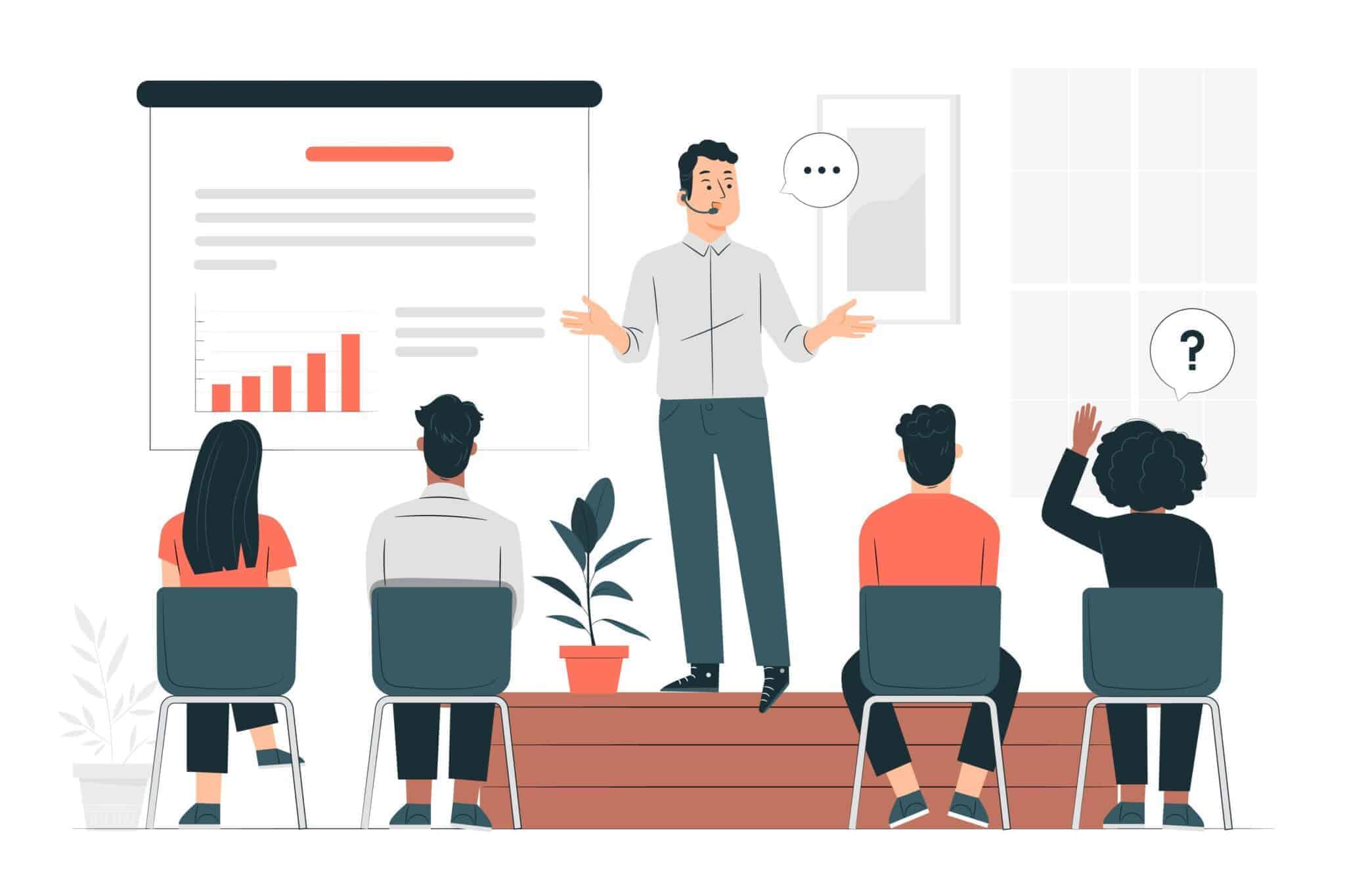
A learning journey is not a longer workshop. It’s a sequence of interventions — diagnosis, delivery, reinforcement, and measurement — designed around a specific behavior change, not a curriculum to get through. The distinction matters because most corporate training still gets built and bought as a single event: a one-day workshop, a keynote, a certification course. Single events create a spike in awareness and almost no change in behavior, because behavior change requires repetition, application, and feedback — none of which fit into a single day.
- Why One-Day Training Doesn’t Work: The Case for Learning Journeys That Drive Real Change — https://focusu.com/blog/why-one-day-training-doesnt-work-the-case-for-learning-journeys-that-drive-real-change/
- The Learning Paradox: Why Traditional Training Isn’t Working — https://focusu.com/blog/the-learning-paradox-why-traditional-training-isnt-working/
- Beyond Delivery: Why Your Corporate Training Fails (and How to Fix It with a Partnership Mindset) — https://focusu.com/blog/beyond-delivery-why-your-corporate-training-fails-and-how-to-fix-it-with-a-partnership-mindset/
This is also the point where most vendor relationships go wrong. A provider selling a single workshop has every incentive to make that one day look complete — a satisfying agenda, a strong close, positive feedback forms. None of that requires the workshop to actually change anything six weeks later. A provider willing to talk about the weeks before and after the session, not just the session itself, is telling you something about how they think about the problem, independent of how good their facilitators are in the room.
Start With the Learner, Not the Curriculum
The most common design mistake is starting with content — what should we teach — instead of starting with the learner — who are they, what’s getting in their way, and what does “better” actually look like for their role. Two people in the same workshop can walk away with completely different value depending on their starting point, their manager’s expectations, and how directly the content maps to a problem they’re actually facing that week.
- One Seat, Two Passengers: Why Knowing Your Learner Is the Foundation of Effective Training — https://focusu.com/blog/one-seat-two-passengers-why-knowing-your-learner-is-the-foundation-of-effective-training/
- Learner Centricity Explained: Why It’s Crucial for Modern Learning Programs — https://focusu.com/blog/learner-centricity-explained-why-its-crucial-for-modern-learning-programs/
- The Blueprint: Designing Learning Experiences for Change — https://focusu.com/blog/the-blueprint-designing-learning-experiences-for-change/
- The Anatomy of Impactful Learning Experiences — https://focusu.com/blog/the-anatomy-of-impactful-learning-experiences/
In practice, this means the diagnosis phase should include actual conversations with the people who’ll go through the program — and often their managers — before a single slide gets built. What’s the specific moment where the current behavior falls short? What have they already tried? What would make this feel relevant rather than generic? Skipping this step is how organizations end up with technically well-designed programs that participants describe as “not really about my job.”
Choosing the Right Mix of Formats
Blended doesn’t mean “a workshop plus an e-learning module.” It means choosing the right format for each part of the journey — live facilitation for practice and feedback, digital tools for reinforcement and access, social and peer formats for sustained behavior change. Get the mix wrong and you end up with either an expensive one-off event or a self-paced course nobody finishes.
- Blended Learning Journeys: Making Learning Stick for Lasting Impact — https://focusu.com/blog/blended-learning-journeys-making-learning-stick-for-lasting-impact/
- The Evolution of Learning Platforms: LMS vs. LXP — https://focusu.com/blog/the-evolution-of-learning-platforms-lms-vs-lxp/
- Digitisation: The Future of Learning — https://focusu.com/blog/digitisation-the-future-of-learning/
- What is Social Learning — https://focusu.com/blog/what-is-social-learning/
- Using the ‘State of Flow’ to Curate Better Learning & Development Modules — https://focusu.com/blog/using-the-state-of-flow-to-curate-better-learning-development-modules/
A useful test when evaluating a proposed format mix: for each element, ask whether it’s there because it’s genuinely the best way to build that specific skill, or because it’s the easiest thing for the provider to produce at scale. Live simulation and practice-based formats are harder to deliver consistently across locations than a recorded video module — which is exactly why providers who invest in doing it well are differentiated, and why it’s worth checking during evaluation, not after signing.
What Happens Before and After the Session Decides Whether It Sticks
The workshop itself is usually the least important part of a learning journey’s impact. What a participant is asked to think about before the session, and what they’re asked to actually do differently after it, is where retention and application either happen or don’t. Most programs over-invest in the middle and skip the two parts that determine whether anything changes.
- Less is More When it Comes to Pre and Post Work — https://focusu.com/blog/less-is-more-when-it-comes-to-pre-and-post-work/
- Turning Knowledge into Skill — https://focusu.com/blog/turning-knowledge-into-skill/
Pre-work should do one job: get the participant thinking about their own version of the problem before they walk into the room, so the session starts at application rather than introduction. Post-work should do a different job: create a forcing function — a manager conversation, a specific task, a check-in — that requires the participant to actually use what they covered within days, not whenever they get around to it. Programs that skip both and rely on the session alone are betting entirely on the workshop being memorable enough to change behavior on its own, which is a bet that rarely pays off.
How to Actually Measure Whether It Worked
“Participants rated the session 4.6 out of 5” is not a measurement of impact — it’s a measurement of whether people enjoyed their afternoon. Most organizations stop at that level because it’s the easiest data to collect, not because it’s the most useful. A genuine measurement approach looks at whether behavior actually changed on the job, not just whether the room was engaged.
We build our own programs around the LTEM model (Learning-Transfer Evaluation Model), which forces a distinction between attendance, learning, application, and business impact — four different things that get collapsed into one number on most feedback forms. If a provider can’t tell you which of these four levels their measurement actually reaches, they’re likely only measuring the first one.
- How FocusU Designs for Impact Using LTEM — https://focusu.com/blog/enhancing-learning-design-with-the-ltem-model-a-guide-for-modern-ld-professionals/
The practical value of a model like this isn’t the acronym — it’s that it forces the measurement conversation to happen before the program is designed, not after it’s delivered. Asking “how will we know this worked, at the business-impact level, not just the attendance level” during the design phase changes what gets built. It’s a much harder question to answer honestly than “what should the agenda cover,” which is exactly why most programs never get asked it.
Getting the Organization to Actually Engage With It
A well-designed journey that nobody signs up for, or that leadership quietly deprioritizes after the kickoff, delivers zero impact regardless of how good the content is. Adoption is a design problem, not an afterthought — it has to be built into the journey from the start, not bolted on with a reminder email.
- If No One’s Signing Up For Your L&D Initiatives, This Might Be Why — https://focusu.com/blog/if-no-ones-signing-up-for-your-ld-initiatives-this-might-be-why/
- Why L&D Gets Ignored — and How to Change That — https://focusu.com/blog/why-ld-gets-ignored-and-how-to-change-that/
- How To Spice Up Your Learning & Development Initiatives? — https://focusu.com/blog/how-to-spice-up-your-learning-development-initiatives/
- Debunking the Top 5 Learning Myths: What You’ve Been Told Isn’t True — https://focusu.com/blog/debunking-the-top-5-learning-myths-what-youve-been-told-isnt-true/
Manager sponsorship is usually the single biggest lever here, and the most commonly skipped. A program that leadership visibly deprioritizes — by not attending the kickoff, not following up on commitments made during the workshop, not asking their teams about it afterward — signals to participants that it doesn’t actually matter, regardless of how the program itself was designed. Building manager involvement into the journey structure, not treating it as a nice-to-have communication step, is what separates programs that spread from programs that quietly get skipped after the first cohort.
Designing for a Workplace Being Reshaped by AI
AI is changing what capabilities are worth building a learning journey around — and, separately, changing how learning itself gets delivered and reinforced. Both matter for a 2026 learning strategy, and they’re easy to conflate. The question isn’t just “should we train people on AI tools” — it’s which human capabilities become more, not less, important as AI takes over more routine work.
- Leadership in the Age of AI — https://focusu.com/blog/leadership-in-the-age-of-ai/
- AI Adoption: A People-Centered Approach — https://focusu.com/blog/ai-adoption-a-people-centered-approach/
Two mistakes show up repeatedly here. The first is treating AI capability as a single training topic — a workshop on “how to use AI tools” — rather than recognizing that it changes the relative importance of skills across every existing program: judgment, communication, and the ability to direct and evaluate AI-generated work now matter more, not less, than they did five years ago. The second is rolling out AI adoption as a top-down mandate without addressing the very real anxiety it creates about role security, which tends to suppress genuine engagement regardless of how good the content is.
A Simple Framework to Use: Diagnose → Design → Transfer
If you take one structural idea from this guide, make it this: a learning journey worth building follows three phases, in order, and skipping any one of them is where most programs quietly fail.
- Diagnose — what specific behavior needs to change, and what’s currently getting in the way of it? Not “what training does this role usually get,” but what’s actually broken.
- Design — build the journey around that diagnosis, choosing formats, sequencing, and facilitation to match how the specific audience learns and works, not a standard curriculum applied uniformly.
- Transfer — build in the pre-work, post-work, manager reinforcement, and measurement that determines whether the behavior actually shows up back on the job, weeks after the program ends.
None of these three phases is optional, and none of them is a one-time step you complete and move past. Diagnosis should continue informally throughout delivery, as you learn more about what’s actually landing. Design should flex based on what the diagnosis phase turns up, rather than following a template regardless of audience. And transfer should be planned before the program starts, not improvised after the last session, because by then the budget, attention, and momentum for reinforcement have usually already moved on to the next initiative.
Most training fails at the third phase, not the first two — which is why the reinforcement and measurement sections above are as long as the design sections. If you’d like help applying this to a specific program, talk to us, or see how we structure learning journeys end to end.
Frequently Asked Questions
There's no single journey format that works universally — the right one depends on the specific behavior you're trying to change and the current gap between how people work now and how you need them to work. What does generalize is the structure: diagnose the actual gap before designing content, build in reinforcement rather than ending at the workshop, and measure application on the job rather than session satisfaction. A journey built on that structure will outperform a longer curriculum built without it.
Long enough to include at least one cycle of application and feedback — typically 6 to 12 weeks for a single capability, longer for a multi-level leadership program. A journey that ends the day the last workshop does hasn't included a transfer phase, regardless of how many sessions came before it.
A training calendar is a schedule of events. A learning journey is a sequence of interventions designed around a single behavior-change outcome, where each step builds on the last. You can have a full training calendar and no learning journeys on it if none of the sessions are sequenced around a shared outcome — that's often exactly what's happening when an organization runs a high volume of training with little to show for it a year later.
No — the framework applies whether it's built and run internally, externally, or as a partnership between the two. What matters is whether someone owns the diagnosis, design, and transfer phases end to end, not who employs them. Where external partners tend to add the most value is in the design and facilitation of the middle phase, and in bringing measurement discipline that's harder to build internally without dedicated capacity for it.
About the author