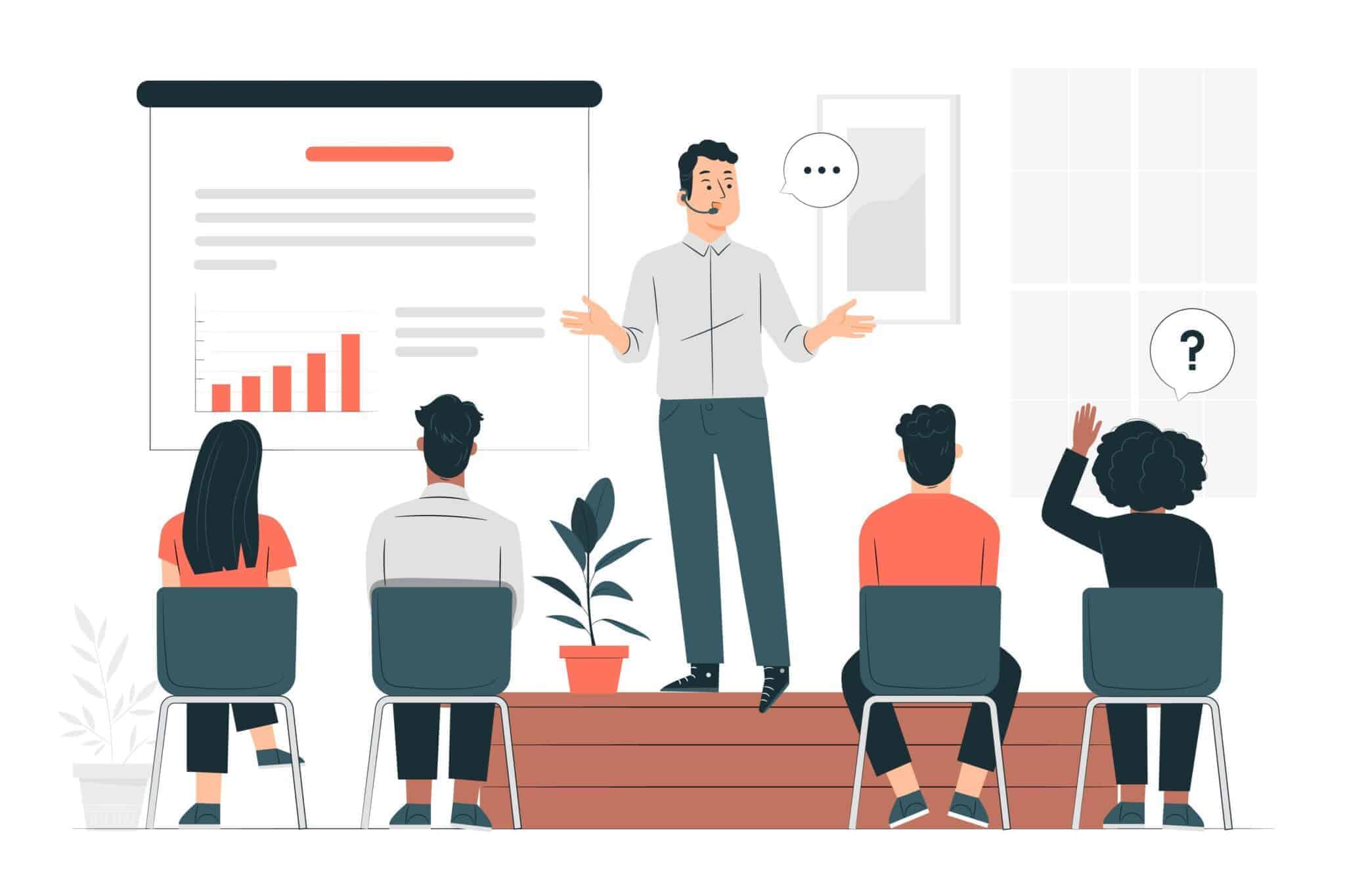
In one of our leadership team interventions last year, we began with a simple exercise. Each participant was asked to pick a picture card that represented how they experienced the team today.
One of the leaders picked a card of a child who was crying. She held it up and said something that stayed with me long after the workshop ended:
“Every day when I leave this place, I feel like crying. This child in the image… that’s me. The place feels very cold.”
That moment set the tone for the rest of the session. It resonated with others. It directly addressed the elephant in the room – the leadership team of this organization, while ambitious and outspoken, was not a space where people could work together well.
The Challenge
The workshop was designed for the six-member leadership team of a rapidly growing e-commerce platform with an ambitious goal of scaling toward an IPO or strategic sale.
The team was new. The leader had joined about a year earlier and had assembled a diverse group of leaders from different industries and geographies. On paper, this looked like an impressive group of highly capable individuals. Each one was driving their function strongly.
Yet there was a growing concern: They were not functioning as a true leadership team.
The leader put it plainly during the opening conversation. Each person was doing well individually, but collaboration across the team was not strong enough.
This is a challenge we see often with leadership teams, particularly when:
- A team has been newly formed
- New leaders have recently joined
- Different organizations’ leaders have integrated due to M&A
- Functional heads move to enterprise roles
As we progressed through the session, the patterns began to emerge.
The Experience
For this leadership team, we had decided to do a DiSC assessment and workshop.
DiSC is a behavioural framework that looks at how people tend to approach pace, decision making, communication, and conflict. The model describes four broad styles:
Dominance (D) – people who tend to move quickly, focus on results, and are comfortable taking charge.
Influence (i) – people who bring energy, enthusiasm, and strong social connection into the room.
Steadiness (S) – people who create stability, patience, and relational warmth in teams.
Conscientiousness (C) – people who prioritise analysis, accuracy, and thoughtful decision making.
No style is better than another. Each brings something valuable to a team. What matters is how the mix of styles plays out in real conversations and decisions.
Once everyone completed their Everything DiSC® assessment, we mapped the team’s behavioral profile. The picture that emerged was fascinating.
Almost the entire leadership team clustered around D (Dominance) and i (Influence) styles.
In other words, this was a team that naturally showed up as:
- Bold and decisive
- Highly energetic and expressive
- Quick to generate ideas
- Comfortable making fast decisions
- Strongly action oriented
In many ways, this was exactly the kind of energy that suits an entrepreneurial growth-stage organization. The team moved fast, spoke openly, and was not afraid of challenge.
But the team profile also revealed something else. There was very little Steadiness in the team. There was also only one leader whose profile carried a strong Conscientiousness orientation.
Once we began discussing what that meant in practice, many of the tensions the team had been experiencing suddenly made sense.
Case 1
While the rest of the team was comfortable acting with incomplete information, her instinct was to pause and examine the data. She wanted clarity, analysis, and risk reduction before committing to decisions.
The tension was almost inevitable.
In meetings, the D-dominant leaders would say things like: “Let’s move forward. We’ll figure it out as we go.”
Her response was often: “But we haven’t thought through the implications yet.”
From her perspective, the team rushed into choices without thinking through the implications. From the perspective of the other leaders, she slowed everything down.
Over time, she naturally began to withdraw from discussions because the conversations moved too quickly. Surrounded by strong personalities who were comfortable debating forcefully, it was easier to step back than to continue pushing her point.
Her silence, however, was sometimes interpreted as agreement. That is how small behavioural misunderstandings slowly turn into larger organisational risks.
Important details can be missed. Risks may not be examined carefully enough. Decisions may later need to be revisited. And perhaps most importantly, people begin to feel misunderstood.
Case 2
Another insight from the workshop illustrated how easily this can happen.
Before the session began, the leader had mentioned that one member of the team seemed distant. He rarely joined informal gatherings and appeared to keep to himself. The assumption was that he might be disengaging from the team.
Later, when we looked at the DiSC continua that describe how people prefer to interact socially, the explanation became clearer. Most members of the team leaned strongly toward the outgoing end of the spectrum. This particular leader sat at the far end of the more private orientation.
For him, connection did not come through large social gatherings or high-energy conversations. He preferred smaller discussions and time to reflect before contributing.
What had been interpreted as disinterest was simply a difference in behavioural preference.
That moment produced one of those ‘a-ha moments’ that often happen during these workshops. The team began to see how many of their assumptions about each other had been shaped by style differences rather than intent.
The Shift
One of the most powerful parts of a DiSC conversation is when the entire team profile becomes visible. Seeing the collective pattern helps leaders understand not just themselves, but the dynamics of the room.
In this case, the team began to recognise both the strengths and the blind spots in their profile.
Their natural D and i energy meant they were decisive, entrepreneurial, and comfortable taking bold bets. That was a real asset in a fast-moving organisation.
But they also saw where they needed to be more intentional.
Without S styles in the room, the emotional climate of the team could sometimes feel transactional. Without enough C energy, decisions might move forward without sufficient analysis.
Once that insight surfaced, leaders realised they needed to intentionally create the habit of pausing and asking questions:
Are we moving too quickly on this decision? Have we examined the risks thoroughly enough? Have we heard every voice before closing the discussion?
These are small questions. But they fundamentally change how a leadership team operates.
Why this Matters for Organizations
A week after the workshop, one of the participants sent a note to our team. He said: “The workshop helped us save six months of time as a leadership team that we would otherwise have spent figuring each other out.”
Six months of leadership team time! In this case, that is the ROI they got from doing this workshop.
This is one reason frameworks like DiSC can be particularly powerful for:
- Founder-led companies bringing in professional executives for the first time.
- Leadership teams bringing in a new leader.
- New leadership teams formed after organisational restructuring.
- Cross-functional leaders who have rarely worked closely together before.
- Global teams where cultural and behavioural differences intersect.
In each case, the leaders are capable individuals, but they do not yet fully understand how to work with each other. Once that understanding is in place, collaboration becomes far easier. And leadership teams can return their focus to what matters most: moving the organisation forward together.
About the author